

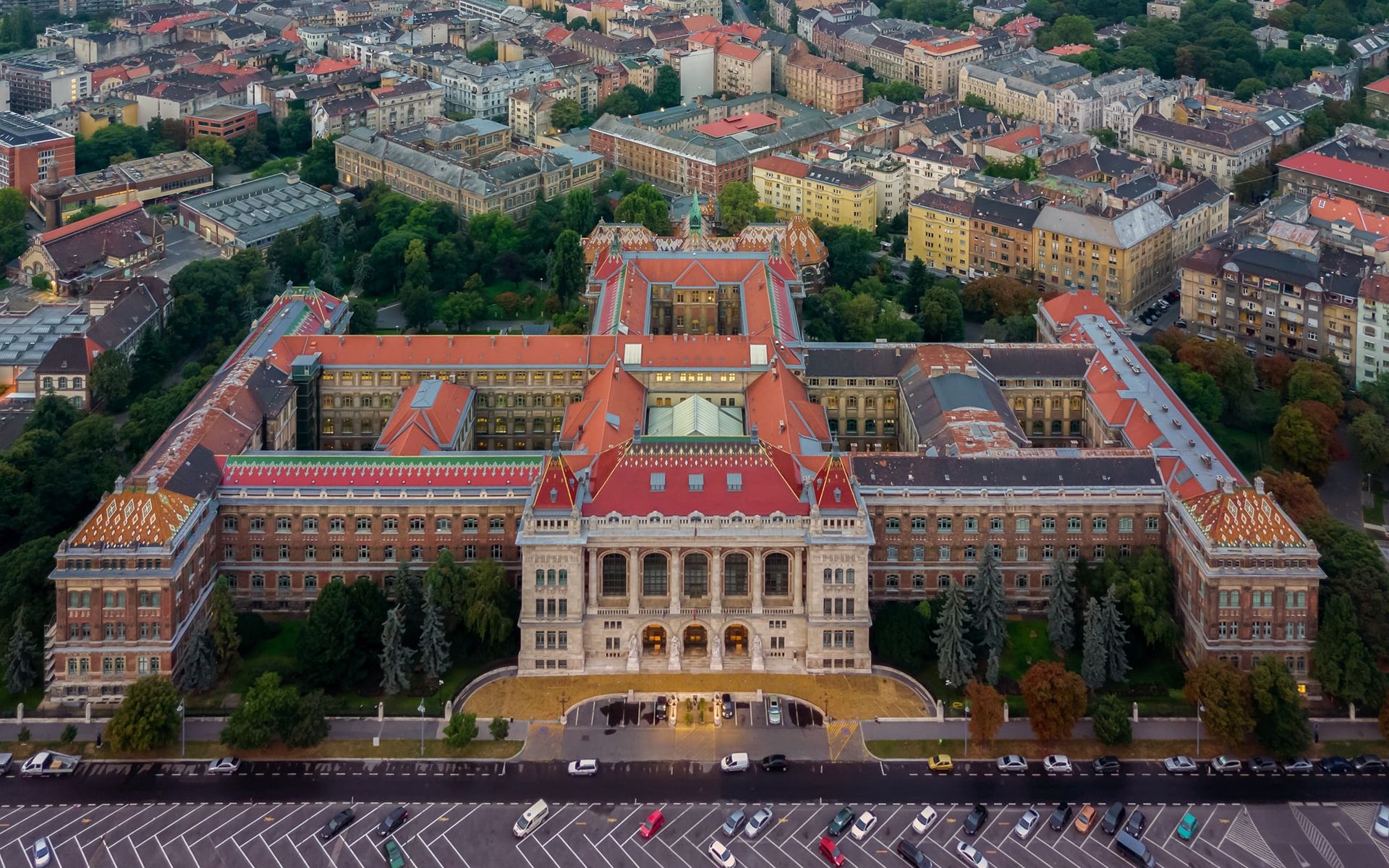
The third semester takes place at the Budapest University of Technology and Economics (BME), located in Budapest, Hungary. As one of Central Europe’s leading engineering universities and a recognized centre of excellence in microelectronics, semiconductor technologies and electronic system design, BME provides students with advanced knowledge and practical skills in semiconductor component design, system integration and digital engineering methodologies. The semester builds upon the semiconductor physics, microfabrication and smart systems competencies acquired during the first two semesters at Aalto University and University of South-Eastern Norway.

During their studies at BME, students will
- Develop advanced expertise in semiconductor component and analog integrated circuit design using industry-standard methodologies and tools.
- Learn modern system-level design methodologies for complex electronic systems and heterogeneous semiconductor integration.
- Continue their studies in Digital Twins through advanced modelling, model reduction and simulation of multi-domain engineering systems.
- Experience industrial electronic design automation software widely used in the semiconductor sector, including tools from Cadence Design Systems, ANSYS and Siemens Digital Industries Software.
- Explore advanced semiconductor technologies such as mixed-signal design, power semiconductor devices and medical devices.
- Strengthen innovation, entrepreneurship and business development skills through the SSI² Design and Innovation Challenge.
- Apply engineering knowledge to real industrial challenges through project-based learning closely connected to European semiconductor industry needs.

Industry collaboration and Summer School
A key feature of the semester is BME’s strong collaboration with leading industrial partners including Infineon, Bosch, Siemens Digital Industries, Cadence and ANSYS. Through these collaborations, students gain exposure to state-of-the-art design environments, contemporary industrial workflows and emerging semiconductor technologies. BME’s modern microelectronics CAD laboratories provide access to a complete integrated-circuit design flow that mirrors practices employed throughout the European semiconductor industry.
The semester also includes a Summer School, where students engage with academic and industrial experts, participate in innovation and entrepreneurship workshops, and present the progress of their Design and Innovation Challenge projects.
A distinctive aspect of the BME semester is its focus on transforming semiconductor technologies into complete electronic systems and innovative products. Students combine technical knowledge with entrepreneurial thinking, preparing them for careers in research and development, semiconductor design, system engineering and technology-driven innovation.